Grand Island, Neb., is made up of around 54,000 residents, and its economy has historically been driven mostly by manufacturing, healthcare and retail. New forces have emerged recently, though: The Grand Island Casino opened in 2025 and in its first year injected nearly $245 million into the economy while creating hundreds of jobs.
Another economic boost happened when the Nebraska State Fair moved from Lincoln to Grand Island, in 2010. Thousands of people travel to Grand Island every summer to visit the fair, including a record 300,000 fairgoers in 2024.
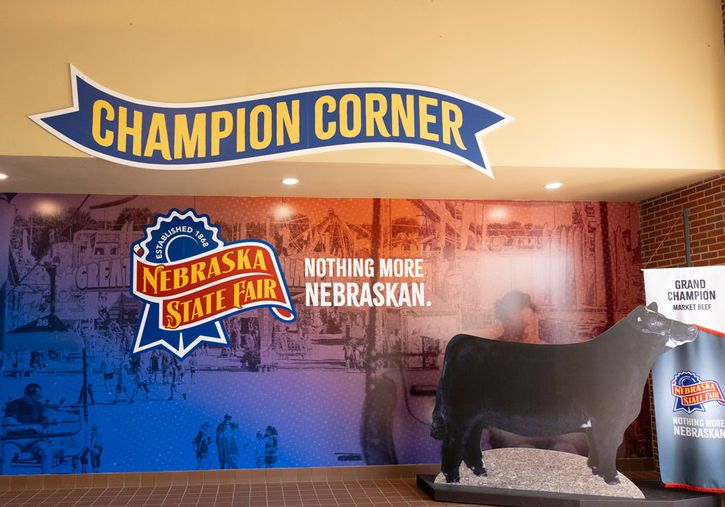
A new vision for the State Fair
“The Nebraska State Fair has made a tremendous impact on the community of Grand Island,” said Cindy Johnson, a government affairs consultant for the fair. “Not only is it an economic engine for this area, but it is for the state of Nebraska as well. Whenever we can bring visitors into our communities across the state, that means additional revenue to those communities.”
Johnson added that the Nebraska State Fair does not own the campus. It’s owned by Fonner Park, and the State Fair is a tenant for two months out of the year. For the rest of the year, other events are held, including national livestock shows.
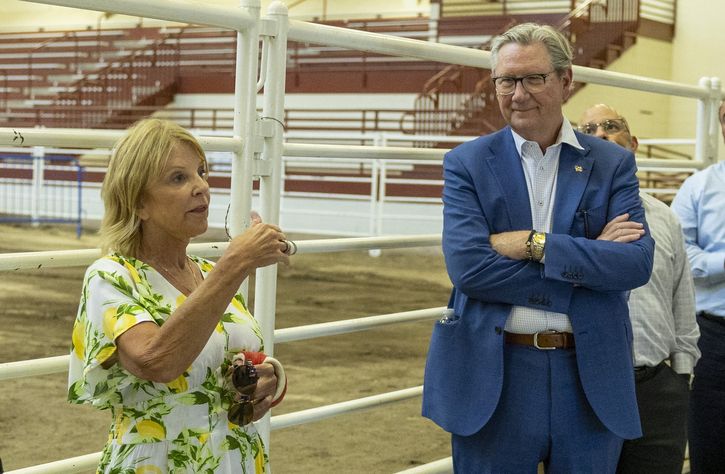
Cindy Johnson speaks with Kansas City Fed President Jeff Schmid during a tour of the fairgrounds.
“Community leaders convinced the legislature that we would hold true to their vision of ensuring that this campus and the investment in these buildings would serve more than 11 days of the Nebraska State Fair,” Johnson said. “So, these buildings are home to numerous junior national livestock shows. Different breeds come to Grand Island. The best is shown here, and they leave with great memories of Grand Island and maybe a purple or blue ribbon as well.”
KC Fed hears from Grand Islanders
Members of the Federal Reserve Bank of Kansas City recently toured the state fairgrounds when the Omaha Branch’s Board held an offsite meeting in Grand Island in July. Exploring various communities that make up the Tenth District is one way to gain insight into the local economic conditions. During a roundtable discussion held with business and community leaders ahead of the tour, Bank leaders also heard firsthand about the local economy.
“Each one of these stops that we make, we try to be as aggressive as anyone to try to really leverage these amazing Board networks and then form roundtables to really get a sense on a real-time basis what’s happening in both the community and regional economies,” said KC Fed President Jeff Schmid.
He added that two primary industries that were negatively affected by post-COVID inflation were housing and healthcare. If those industries are healthy, he said, then the community is going to be healthy.
“We got some really good insights at the roundtable in those two areas,” Schmid said. “We had some great expertise, some fine leadership at the table. I think we were able to come away with some good data to integrate into some of our research that we're doing in both those industry segments.”
“Part of the reason that we’re here in Grand Island is to learn more about the local economy,” said Nate Kauffman, Omaha Branch senior vice president and executive. “We hear a lot from these communities, especially those that are heavily concentrated in an industry like manufacturing. They're continuing to experience cost pressures, while at the same time trying to manage through workforce issues and labor scarcity, and the issues that employers might face on a regular basis that we don't always see through data. It's helpful to hear those comments directly from those that we interact with.”
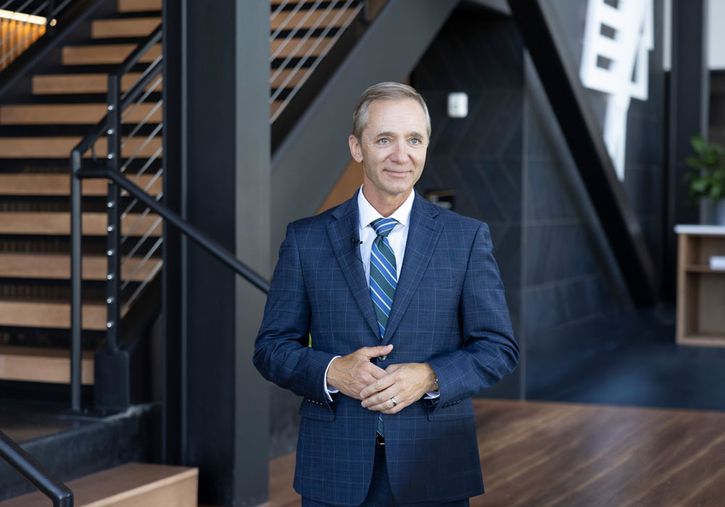
Chief Industries CEO DJ Eihusen sits on the Omaha Branch Board of Directors.
One of Grand Island’s biggest employers
Chief Industries is one of the bigger employers in Grand Island, with around 1,500 employees. The company operates in sectors including manufacturing, construction, agriculture storage, transportation and energy. Some of its products include factory-built homes, metal fabrication, structural steel for construction projects and powder coating. Chief also developed more than a million square feet of office, residential and hospitality space in Lincoln. Two current development projects include Prairie Commons in Grand Island and Fountain Point in Norfolk.
Virgil Eihusen started the company in 1954, and his grandson External LinkDJ Eihusen is the president and CEO today. He also sits on the Omaha Branch Board of Directors and hosted the offsite meetings and tours.
“It’s been great having the Board here and just really showing the community and what’s taking place here,” he said. “We can be behind four walls talking about things, and you can look at data on a graph sheet, but when you can come out and see the community firsthand, immerse yourself in it, you get a real feeling for what really is going on.”
Eihusen invites anyone who wonders what tourists can do in central Nebraska to visit and find out for themselves.
“We have the Nebraska State Fair, we have live horse racing, we have a new casino, and we have all sorts of activities taking place here in this community,” he said. “Unless you come out here and see it, you probably wouldn’t expect that to be the case.”
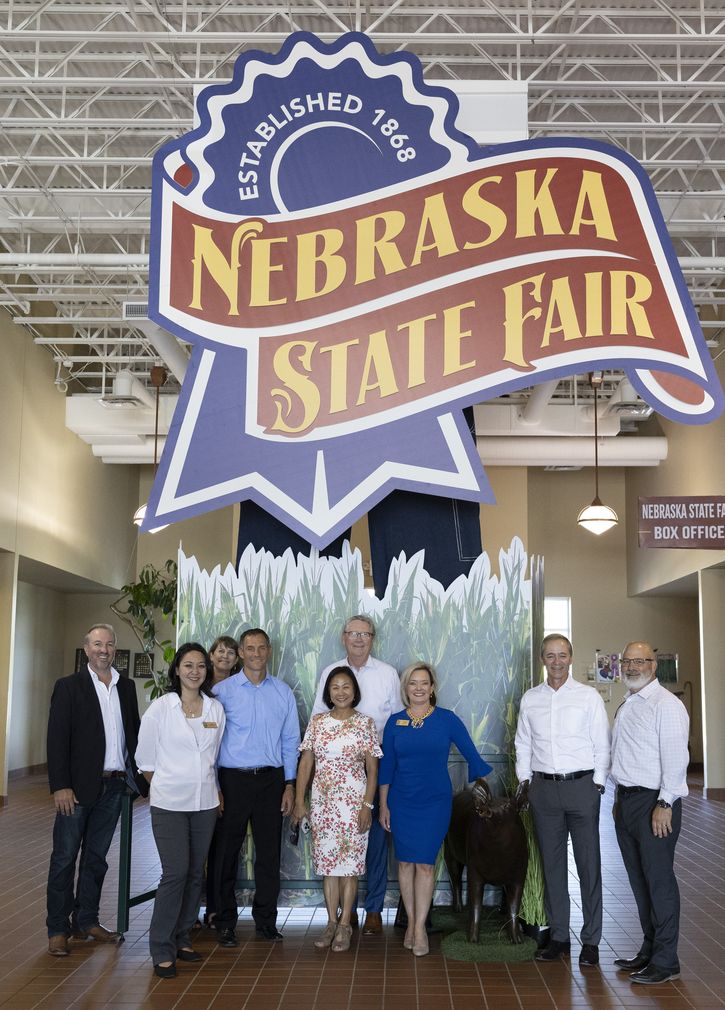
(L-R) Kyle Arganbright, Diane Stinton, Susan Wilkinson, Nate Kauffman, Joanne Li, Jeff Schmid, Chanda Chacon, DJ Eihusen, David Roth.
Perspectives throughout the region
Tenth District leaders spent the spring and summer traveling to numerous sites in its seven-state region, which includes Kansas, Nebraska, Oklahoma, Colorado, Wyoming and parts of New Mexico and Missouri. Each area has its own unique economic footprint, and each is best understood in person.
“When it comes to discussions that might happen in Washington, D.C., for example, or at our head office in Kansas City, it's important to make sure that we include perspectives that come from throughout the region that we represent,” said Kauffman. “In our case, that's seven states in the middle of the country, and we need to spend deliberate time in a community to really be able to understand the structure of that community.”
The Omaha Branch Board of Directors usually has one offsite Board meeting a year to give directors the chance to see and experience another board member’s local community. The Omaha Branch has seven board members, spanning different parts of the state in various industries.
The views expressed are those of the authors and do not necessarily reflect the positions of the Federal Reserve Bank of Kansas City or the Federal Reserve System.
Author