
Third quarter results from the energy survey showed that Tenth District energy activity continued to grow, and six-month expectations remained expansionary. Firms reported that oil prices needed to be on average $64 per barrel for drilling to be profitable, and $85 per barrel for a substantial increase in drilling to occur. Natural gas prices needed to be $3.59 per million Btu for drilling to be profitable on average, and $4.70 per million Btu for drilling to increase substantially.
Summary of Quarterly Indicators
Tenth District energy activity continued to grow in the third quarter of 2026, as indicated by firms contacted between September 15, 2026, and September 30, 2026 (Tables 1 & 2). The quarter-over-quarter drilling and business activity index was 20 in quarter 3, up from 18 in quarter 2 and from 0 in quarter 1 (Chart 1). All quarter-over quarter indexes posted positive readings except supplier delivery time at -14. Quarterly revenues and profits growth cooled from their last readings but remained positive, each with index values of 33. Employment and access to credit also cooled, to 3 and 10 respectively.
Drilling activity growth accelerated from this time last year, with the year-over-year drilling/business activity index rising from 9 to 21 in quarter 3, its highest reading since the fourth quarter of 2022. All year-over-year indexes were positive except for supplier delivery time. Capital expenditures accelerated from 15 to 37 as the annual profits index increased to a reading of 55.
Half of firms expect oil prices to be lower in the next six months, while another third expect them to be unchanged. Despite this, expectations for activity, profits, investment, and other indicators increased from last quarter, with the expected drilling activity index rising from 12 to 18. The average firm expects WTI oil prices to meet $85/barrel in the next six months, the same price firms report needing to substantially increase drilling.
Chart 1. Drilling/Business Activity Indexes
Skip to data visualization table| Quarter | Vs. a Quarter Ago | Vs. a Year Ago |
|---|---|---|
| Q3 22 | 44 | 78 |
| Q4 22 | 6 | 56 |
| Q1 23 | -13 | 17 |
| Q2 23 | -19 | -16 |
| Q3 23 | -13 | -23 |
| Q4 23 | -33 | -33 |
| Q1 24 | -13 | -26 |
| Q2 24 | -14 | -25 |
| Q3 24 | -13 | -29 |
| Q4 24 | -13 | -16 |
| Q1 25 | 6 | -18 |
| Q2 25 | -17 | -17 |
| Q3 25 | -16 | -24 |
| Q4 25 | -39 | -50 |
| Q1 26 | 0 | 0 |
| Q2 26 | 18 | 9 |
| Q3 26 | 20 | 21 |
Summary of Special Questions
Firms were asked what oil and natural gas prices were needed on average for drilling to be profitable across the fields in which they are active. The average oil price needed was $64 per barrel (Chart 2), while the average natural gas price needed was $3.59 per million Btu (Chart 3). Firms were also asked what prices were needed for a substantial increase in drilling to occur across the fields in which they are active. The average oil price needed was $85 per barrel (Chart 2), and the average natural gas price needed was $4.70 per million Btu (Chart 3).
Firms reported what they expected oil and natural gas prices to be in six months, one year, two years, and five years. The average expected WTI prices were $85, $75, $74, and $78 per barrel, respectively. The average expected Henry Hub natural gas prices were $3.35, $3.57, $4.08, and $4.65 per million Btu, respectively. Firms were asked the primary factor enabling them to increase production without adding new workers. A plurality of firms (38%) reported technology and/or automation improvements as the top factor enabling productivity, while 31% reported reduced turnover, 14% said subcontracting and/or outsourcing, and 17% reported they were unable to increase production without adding workers.
Contacts were also asked how long they expect it to take for the spread between fuel prices and crude oil to return to 2025 levels. One tenth of firms expect the gasoline-crude oil spread to return to 2025 levels in 1-2 quarters, while 27% expect 2-3 quarters, 40% expect 3-4 quarters, and 23% reported no opinion. On average, firms expect the diesel-gasoline spread to take longer to return to previous levels, with most firms (59%) expecting a return in 3-4 quarters. Only 3% of firms expect diesel spreads to return to 2025 levels in 1-2 quarters, another 17% expect 2-3 quarters, and 21% reported no opinion.
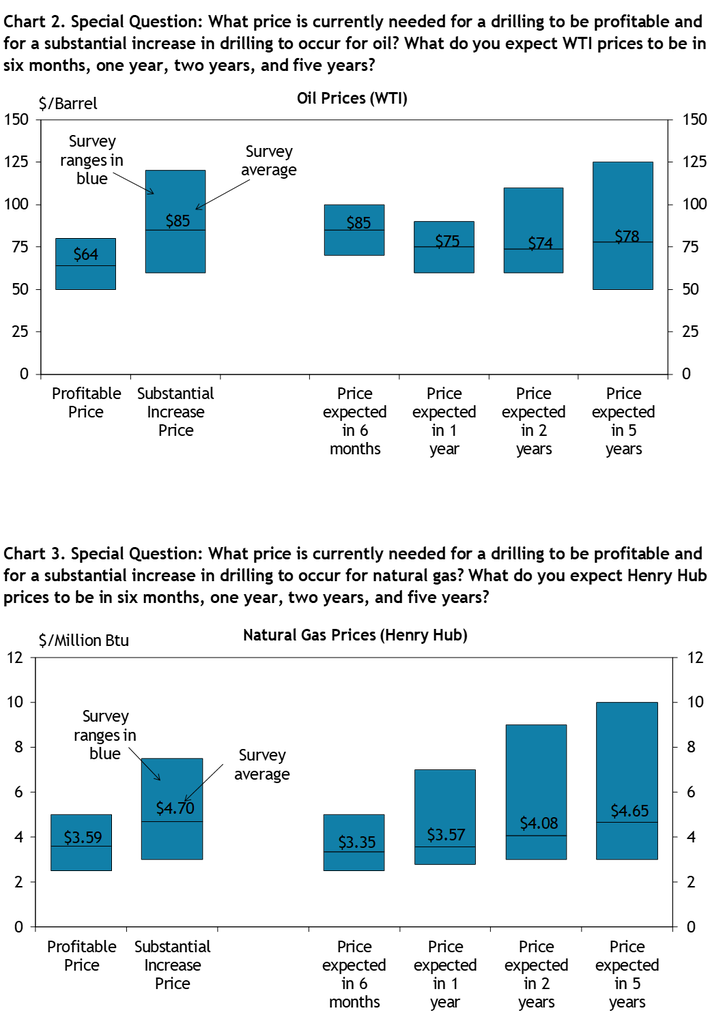
Chart 4. Special Question: What is the primary factor enabling you to increase production without adding workers?
Skip to data visualization table| Category | Percent |
|---|---|
| Technology/automation improvements | 38 |
| Reduced turnover | 31 |
| Subcontracting and/or Outsourcing | 14 |
| Unable to increase production without adding workers | 17 |
| Other | 0 |
Chart 5. Special Question: How many quarters do you expect it will take for the spread between fuel prices and crude oil prices to return to levels seen in 2025?
Skip to data visualization table| Category | Gasoline | Diesel |
|---|---|---|
| 1 quarter or less | 0 | 0 |
| 1-2 quarters | 10 | 3 |
| 2-3 quarters | 27 | 17 |
| 3-4 quarters | 40 | 59 |
| No opinion | 23 | 21 |
Selected Energy Comments
“There is a tremendous amount of uncertainty in the long-range supply/demand of oil and natural gas for numerous reasons: war and threat of war, permitting and equipment delays, and weather disruptions.”
“Oil price visibility is very challenged right now; price levels are subject to circumstances outside of normal supply/demand dynamics, which leads to low predictability.”
“Putting out bigger horsepower rigs (1500 to 2000) to move into southern Oklahoma and west Texas. We're scrapping our smaller rigs machinal rigs due to lack of demand.”
“Managing expenses under inflationary pressure. Managing through high volatility in commodity pricing.”
“Oil and gas prices we believe will stay in a window that supports drilling through 2027.”
“Continue to execute while trying to temper cost increases, especially for diesel and steel.”
“We are more focused on acquisitions than organic growth at present, primarily in the natural gas weighted plays.”
“Natural Gas prices will not recover in the next year. No demand increase except coastal LNG.”
“Natural Gas prices have been weak. We produce 70% NG by volume. Therefore, the weak pricing has moved us to slow capex next year.”
“New overseas oil supplies being developed. Even with higher prices, domestic increases muted.”
“The current oil price, inflation adjusted, does not create enough demand destruction.”
“Increasing ownership of large gas assets for example in the Deep Bossier/Western Haynesville in Texas skews the economics differently to delivered prices in countries such as Japan.”
“Domestic gas price will be linked to US LNG send out. Demand from data centers will be very hard to predict and, while supportive, will probably not drive significant price gains.”
“The projected record El Nino could add an additional trillion cubic feet of natural gas into storage if it comes through this winter.”
Additional Resources
Current Release
Download Historical Data
About the Energy Survey
The views expressed are those of the authors and do not necessarily reflect the positions of the Federal Reserve Bank of Kansas City or the Federal Reserve System.
Authors

Cortney Cowley
Assistant Vice President and Oklahoma City Branch Executive