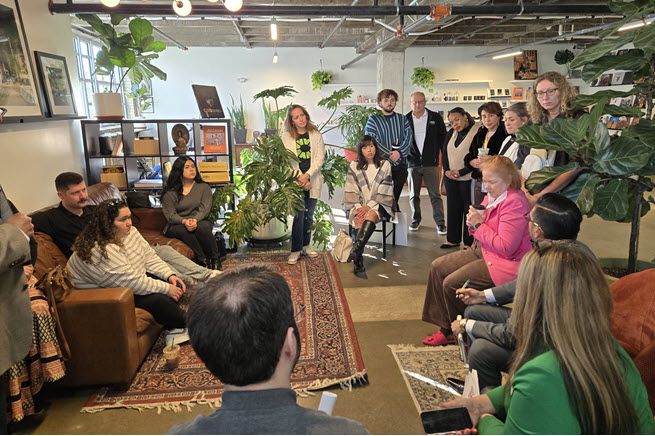
In December, Kansas City-based bankers and community leaders gathered in intimate settings – a cozy coffee shop, local taqueria, and nonprofit business incubator – to candidly discuss partnerships, best practices, and the Community Reinvestment Act (CRA). The Money Matters Alliance organized the informal conversations. Participants discovered common ground in their shared commitment to supporting lower-income communities, despite a challenging year.
What the data says
According to the External Link2025 Community Perspectives Survey conducted by the Federal Reserve System, organizations serving low-to-moderate income communities report that they can generally serve their communities effectively. Funding challenges and staffing shortages, though, increasingly constrain their ability to fully meet demand.
A prominent finding revealed a significant decline in government funding. Among organizations that relied on government funds, 73% experienced a decrease compared to the previous year, with nearly a quarter reporting a "significant” decrease. This represents the largest downward shift across all funding categories.
The survey data showed that among the organization's top three sources of revenue, more organizations reported funding decreases than increases across most revenue streams, with two notable exceptions: fees for services and credit/loans. More than 35% of organizations dependent on service fees saw increased revenue from this source during the past year. Meanwhile, organizations relying on credit and loans reported 41% growth in credit and loan revenue.
Respondents identified a new theme that emerged from this year’s survey: the challenge of adapting to uncertainty. This highlights an additional pressure point for service providers beyond the established concerns of funding and staffing shortages.
Relationships as anchors during uncertainty
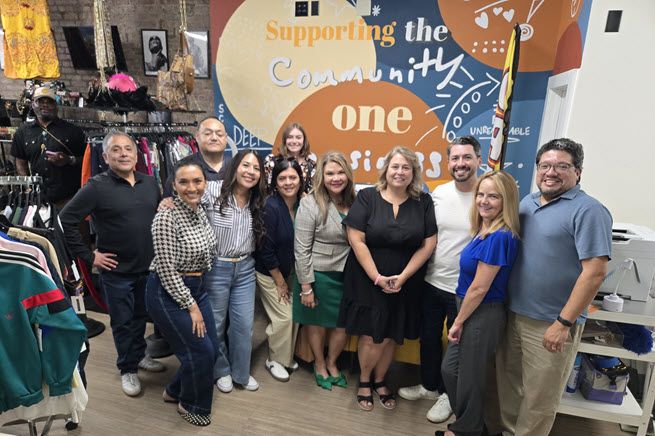
Stacy Purvis, director of business development with CHES Inc. and organizer of the Money Matters Alliance, champions knowledge sharing as a vital resource for nonprofits. "Knowledge sharing can help nonprofits better serve their clients and their internal needs," explained Purvis. This philosophy drives the Money Matters Alliance, a local initiative that has reconnected community partners in the post-COVID landscape.
The Alliance sponsors informal gatherings that give people the chance to share information and discuss topics openly. "We received several questions from our nonprofit partners,” Purvis said, “about the basics of the CRA and how it helps organizations partner with financial institutions."
Ariel Cisneros and Marisa Martinez, community development advisors from the Federal Reserve Bank of Kansas City, facilitated a few of the Alliance’s informal gatherings and coordinating their own one-on-one conversations that explored lived experiences in leveraging the CRA.
The Alliance gatherings highlighted a consistent theme: the critical importance of business relationships during unpredictable times. Participants repeatedly emphasized how open communication, mutual respect, and an understanding of shared goals helped them maintain focus on their missions throughout the year.
Jorge Soberon-Hernandez, community development market manager with Arvest Bank, participated in the conversations. “We try to make meaningful relationships (with nonprofits) that are much more than just transactional,” he said, “but rather, deep partnerships that can better serve the community by providing products, resources and services."

Beyond financial investments: human connections
The Alliance discussions showed that nonprofit organizations facing significant funding cuts were reassessing their operating models. They often needed to diversify beyond traditional funding sources to fulfill their missions.
This strategic shift comes at a particularly challenging time. According to the April 2025 Community Perspectives Survey, nearly 80% of respondents said demand for their services increased over the preceding year, with 35% characterizing this increase as significant. Escalating demand, in addition to declining revenues, places growing pressure on organizations' capacity to meet the needs of low-to-moderate income (LMI) communities.
During the Alliance discussions, many participants acknowledged confronting similar challenges within their own organizations. However, attendees also expressed appreciation for discovering how banks can support their work beyond direct financial investments—particularly through human-to-human connections and community development services. These relationship-based supports have emerged as an increasingly valuable complement to traditional funding mechanisms, offering new pathways for collaboration in the evolving nonprofit landscape.
Sandra Olivas, director of community development at First Federal Bank of Kansas City, shared her perspective on giving back: "Uncertainty leads to fear, especially in my community. I give my time because it builds bridges between different worlds, creating understanding where there’s separation."
Aryn Peters, community development officer with NBKC echoed this sentiment: "In my role, I get to walk alongside organizations and connect opportunities that are mutually beneficial."
Looking forward
"I'm glad Ariel and I had the opportunity to work together on these sessions to listen and learn together," Martinez said. "The most transformative community work begins with sincere questions about what people are experiencing, not with predetermined solutions."
Cisneros believes these intimate discussions are vital for the Federal Reserve Bank of Kansas City to understand how the broader economy affects everyone, regardless of income. “We will continue providing educational sessions on the CRA,” he said, “equipping community leaders with another tool for their partnerships and investment efforts.”
Both Cisneros and Martinez believe the conversations illuminate how, even in times of regulatory change and economic uncertainty, relationships built on trust and mutual understanding become the foundation for resilient communities and effective partnerships.
Look for other ways to engage with the Federal Reserve Bank of Kansas City and the CRA
- Learn about recent updates on the CRA at External LinkThe Community Reinvestment Act (CRA): What’s next? - Federal Reserve Bank of Kansas City
- Submit CRA-eligible partnership activities through the Investment Connection portal or attend an investment connection event. Visit: External LinkInvestment Connection - Federal Reserve Bank of Kansas City
- Attend the March 23-26, 2026, National Community Investment Conference, Innovations in Public-Private Partnership, which will highlight strategies for advancing economic opportunity through access to credit, investment, and financial services, with a focus on effective partnership models. Click External Linkhere to learn more.
Article Citation
Howland, Steven. 2025. “2025 Community Perspectives Survey: Insights from the Field.” Federal Reserve Bank of Kansas City, August.
The views expressed are those of the authors and do not necessarily reflect the positions of the Federal Reserve Bank of Kansas City or the Federal Reserve System.
Authors

Ariel Cisneros
Senior Advisor