
Center for Agriculture and the Economy
Leveraging expertise from the Kansas City Fed, the Center provides timely analysis of industry developments and conducts ongoing research on the agricultural economy.
Rural Labor Markets are Likely Disrupted Most When Meatpacking Jobs Relocate
By John McCoy and Francisco Scott
September 18, 2026
Rural labor markets are likely to be more adversely affected from recent meatpacking closures than those near urban areas. Rural counties tend to have a higher share of their workforce employed in meatpacking plants. However, a significant number of these meatpacking-dependent counties are also near urban areas. Counties with high concentrations of meatpacking jobs near metropolitan areas have a larger, more dynamic labor market that can help workers transition to new jobs. If meatpacking plants in urban or urban adjacent counties close or consolidate, workers in these areas will likely transition faster to new jobs than workers in rural areas.
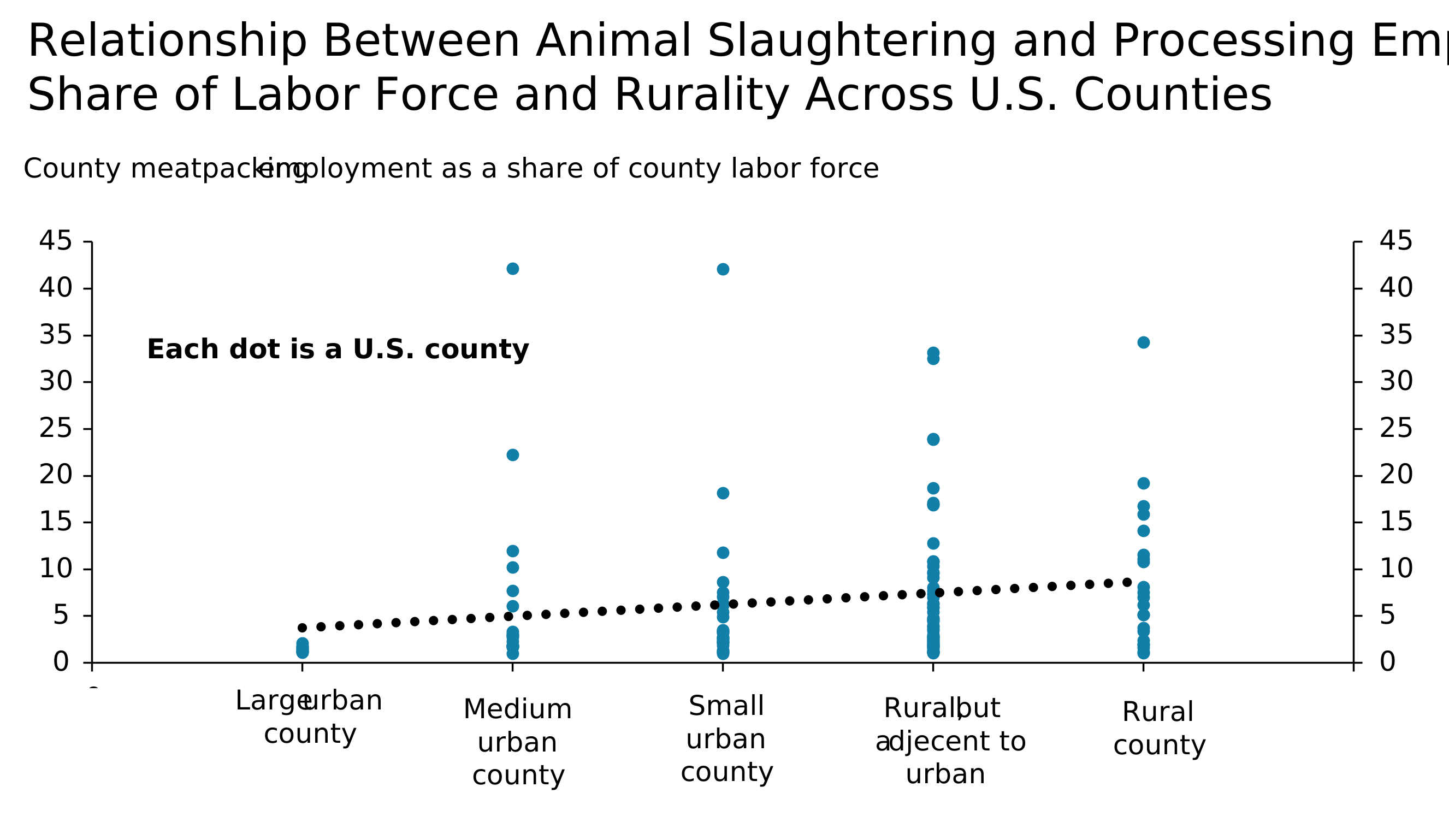
Notes: Meatpacking employment as a share of labor force uses 2023 data from county business patterns. Each dot represents a county. Sample includes all U.S. counties that have at least 1% of their labor force working in animal slaughter and processing plants. We modified the USDA rurality continuum to create a new typology for urban and rural counties. Urban counties with population of 1 million, between 250 thousand and 1 million, and less than 250,000 are classified as Large urban, Medium urban, and Small urban, respectively. Counties in rural areas but adjacent to urban areas are classified as Rural, but adjacent to urban, and those rural counties not adjacent to urban areas are classified as Rural county. Black line shows the relationship between meatpacking jobs as a share of labor force and an encoded version of the rurality categories that vary from 1 to 5, 1 being most urban and 5 being the most rural.
Sources: U.S. Census Bureau, USDA, authors’ calculations
Find additional Insights on Agricultural and Rural Economies.
Research and Information
Agricultural Finance
Research and articles tracking trends in agricultural finance.
Insights on Ag and Rural Economies
Concise analysis on agricultural and rural economic trends.

Agricultural Data and Indicators
Data on economic and financial conditions in agriculture.
Agriculture Research Hub
All of the Kansas City Fed's research and resources on agriculture and related topics.
System Resources
Links to research and resources on agriculture and rural topics from throughout the Federal Reserve System.
Latest Research and Updates

-
2026 Agricultural Economic Summit | -
Farm Finance Deterioration Eases Slightly | -
Steady Tightening of Agricultural Credit Conditions Persists | -
High Costs and Uncertainty Will Likely Keep Cattle Inventories Low and Beef Prices Elevated for Some Time | -
Center for Agriculture and the Economy at the Federal Reserve Bank of Kansas City Launches Agricultural Advisory Council | -
Agriculture, the Economy, and the Kansas City Fed |
-
Farm Finance Deterioration Eases Slightly | -
Steady Tightening of Agricultural Credit Conditions Persists | -
New Farm Loan Originations Ease Slightly | -
Farm Loan Growth Remains Strong as Lending Shifts at Some Large Banks | -
Continued Resilience in Farmland Values | -
Sharp Growth in Tenth District Ranchland Values |
- Update on U.S. Economy and Agriculture |
-
Agriculture, the Economy, and the Kansas City Fed | - Economic Update on the U.S. Farm Economy |
- Update on Agricultural Credit Conditions |
- Agricultural Economic and Financial Outlook |
- An Update on Agriculture and the Economy - AgExcellence Nashville |
The Kansas City Fed's Continuing Commitment to Agriculture
Through regular surveys, analysis and connections across the industry, the Kansas City Fed has had a longstanding focus on U.S. and global agriculture. Leveraging this expertise, the Center for Agriculture and the Economy serves as a resource within the Federal Reserve System by providing timely analysis of industry developments and conducting ongoing research on the agricultural economy. The Kansas City Fed is committed to understanding developments in the agricultural economy and gathering perspectives from rural America in order to include them in discussions on the national economy.
The Kansas City Fed's Ag Connection
Agriculture is central to the Kansas City Fed’s 10th District’s economy, from farm production and food manufacturing to agricultural banking and finance. Through its regular surveys, analysis and connections across the industry, the Kansas City Fed has had a longstanding focus on the U.S. and global agricultural economy. At the same time, connecting with stakeholders and ag industry professionals through events, round tables and conversations is critical to the Bank’s work.