
In August, the Center for Agriculture and the Economy at the Federal Reserve Bank of Kansas City held its annual Agricultural Economic Summit at the Omaha Branch. The event, titled “The Business of Agriculture Amid Structural Change,” included panels and discussion sessions exploring the sector’s future. President Jeff Schmid provided a External Linkkeynote address.
Topics discussed included the convergence of uncertain government policy, technological innovation, demographic transitions, changing consumer preferences and the economics of U.S. row crop production in shaping long-term decision making in the agricultural sector.
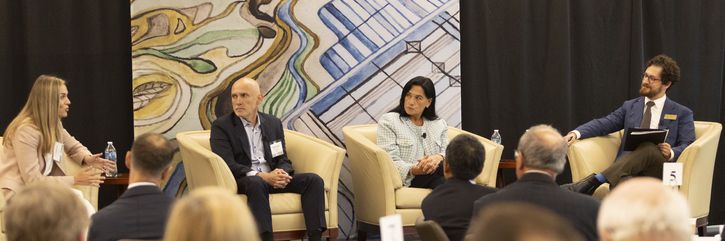
Ag Summit participants take part in a forum.
Key factors influencing the business of agriculture as identified by participants at the Ag Summit include:
- Government policy affects many major economic conditions and is a main driver of structural change.
- The increased cost of capital is shaping investment decisions.
- Technology is changing rapidly and being leveraged to gain efficiency.
- Labor availability and skills gaps remain a challenge across the sector.
- Aging populations and slower population growth are key factors shaping the long-term demand outlook for agricultural products.
- Changing consumer preferences and GLP-1 adoption are shaping food demand.
“The long-term factors discussed throughout this year’s Summit will be important underlying drivers of the agricultural economy for years to come,” said Nate Kauffman, executive director of the Center for Agriculture and the Economy. “Hearing directly from industry leaders allows us to better understand the issues shaping agriculture and helps inform the Kansas City Fed as we fulfill our role in monetary policy.”
The Agricultural Economic Summit, now in its third year, convenes leaders and experts in the agricultural industry to discuss a topic of current or emerging significance to the sector. The Kansas City Fed launched the Center for Agriculture and the Economy in 2025, underscoring the Bank’s ongoing commitment to including perspectives from agriculture and rural areas in discussions on the national economy. For more information about the Center, External Linkclick here.
The views expressed are those of the authors and do not necessarily reflect the positions of the Federal Reserve Bank of Kansas City or the Federal Reserve System.