The Oklahoma City Branch hosted an impactful State Small Business Credit Initiative (SSBCI) convening for tribal governments in partnership with the U.S. Treasury last December.
“In Oklahoma alone, Tribal governments have access to approximately $200 million in SSBCI 2.0 capital to leverage private dollars through credit and equity programs, separate from the State of Oklahoma’s SSBCI allocation,” said Sallie Traxler, managing director at Development of Capital Networks.
The event brought together approximately 25 representatives from 12 Native nations: Caddo Nation of Oklahoma, Cherokee Nation, Cheyenne and Arapaho Tribes, Citizen Potawatomi Nation, Comanche Nation, Kiowa Indian Tribe of Oklahoma, Otoe-Missouria Tribe of Indians, Pawnee Nation of Oklahoma, Chickasaw Nation, Muscogee Creek Nation, Osage Nation, and the Seminole Nation of Oklahoma.
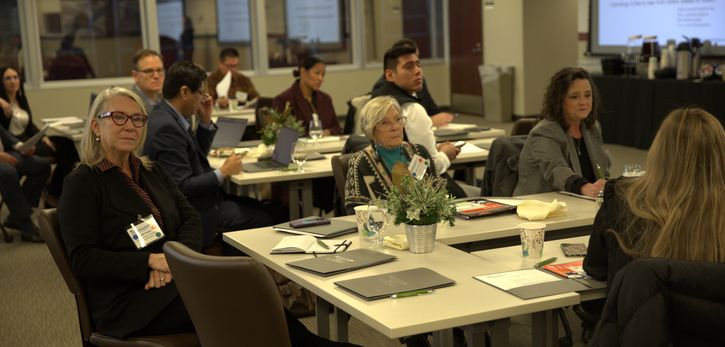
Attendees look on at the SSBCI convening.
The attendees, including several elected and appointed tribal officials, participated in productive discussions about SSBCI program deployment. Oklahoma’s participating tribal jurisdictions manage three kinds of programs: collateral support, equity capital, and loan participation, with over $250 million in available funds.
Chris Tweedy is the CEO of the Chickasaw Nation Capital Access Division. He helps support lending partners in making commercial loans to Chickasaws and others who lack access to commercial loan capital due to lack of collateral.
“The Federal Reserve Bank of Kansas City provides an excellent platform for its member banks to learn about capital access programs, where banks can meet their lending goals along with helping the Chickasaw Nation and other tribes open up channels to commercial lending capital in Indian County as a whole,” Tweedy said.
Cindy Logsdon, CEO of the Citizen Potawatomi Community Development Corporation, was there to provide input on the program, provide partnering opportunities and encourage others who may be struggling to deploy their allocation.
“SSBCI to tribes will inject millions into projects that may otherwise not get financing in Indian Country,” Logsdon said. “The program requires private matching dollars of at least 50% of the project. Lending institutions are needed to provide this required private match. Without a lending partner tribes are unable to deploy and spur the intended outcome of the program.”
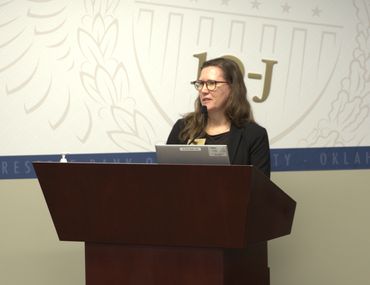
Jennifer Chadwick, community development advisor, offers some remarks.
Jennifer Chadwick, community development advisor at the Kansas City Fed, said this event was important because it addressed systemic economic barriers facing tribal communities.
“These programs’ objective is to provide access to capital in historically underserved Native American communities,” she said. “Ultimately, these efforts could help to create lasting economic opportunities and self-sufficiency for tribal communities and Nations.”
During the event, attendees were able to share successes, address challenges, and explore innovative approaches to deploying allocations. The positive response led to recommendations for future meetings.
“The time to deploy the program funds is limited so in the next year many tools will be utilized including additional convening, publications, roundtable discussions, and panel presentations,” Chadwick added.
The SSBCI aligns with the Community Reinvestment Act’s goals of meeting the credit needs of all communities through increasing access to credit for small businesses.
The views expressed are those of the authors and do not necessarily reflect the positions of the Federal Reserve Bank of Kansas City or the Federal Reserve System.
Author