
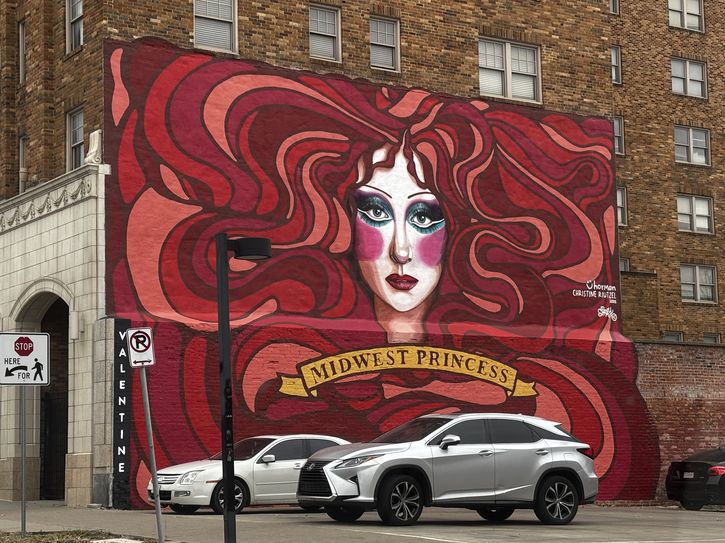
Ahead of her concerts in October 2025, a mural near downtown Kansas City depicted singer and songwriter Chappell Roan.
Missouri’s own Chappell Roan performed two sold-out performances Oct. 3 and 4 in the Kansas City Fed’s backyard on the lawn of the National WWI Museum and Memorial. The tour had stops in only three cities: New York, Los Angeles and Kansas City.
Roan said she chose Kansas City because it’s where she saw her first concert, and each night around 30,000 fans came out to see her in action. Even the “Pink Pony Express” KC streetcars were wrapped in pink and blue on the outside with disco balls inside.
“Visit KC estimated the two combined Chappell concerts would result in an estimated $13.8 million in economic impact for the KC area,” said Makenzie Wolters, Visit KC’s communications manager. “That spending is a direct result of this event and goes into our local economy, supporting hotels, businesses, restaurants, etc.”
Jeremy Hill, Kansas City Fed assistant vice president and regional executive, said there is more than visitor spending to capture that overall economic picture. He said there are at least four broader factors to consider: global exposure, talent attraction, cultural capital and venue validation.
“These elements contribute to the city’s long-term competitiveness, perception, and livability in ways that complement beyond the temporary economic and fiscal impacts,” he said.
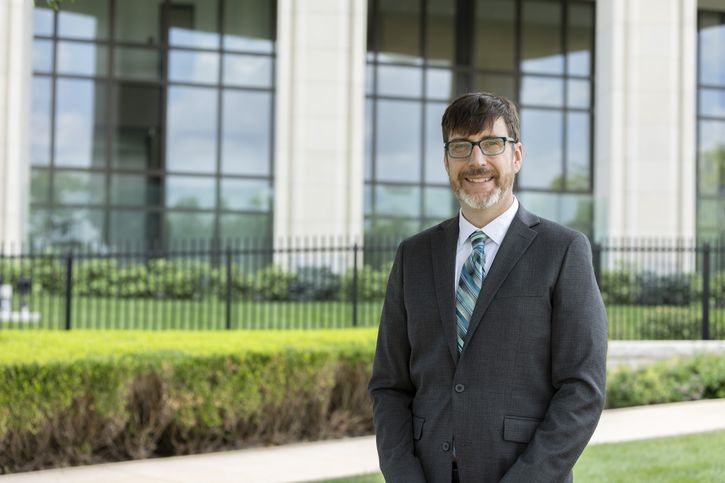
Viral content around the Chappell Roan concerts "brought Kansas City’s name and skyline into households and online feeds worldwide, many of which would not typically associate the Midwest with cultural vibrancy,” said Jeremy Hill, Kansas City Fed assistant vice president and regional executive.
Hill said the concert weekend provided an important real-world test of the city’s readiness to host future international events, including the FIFA World Cup.
“The concert demonstrated the city’s operational capacity for large-scale gatherings, including transportation logistics, public safety coordination, lodging availability, and hospitality readiness around the National WWI Museum and Memorial site,” he said. “In many ways it served as a soft pilot for the World Cup experience.”
While Kansas City has hosted other high-profile events, he said, few have elevated the city’s image on a global scale to the same extent. The exclusivity of the concerts created a unique visibility advantage.
“The extensive media coverage and viral social content brought Kansas City’s name and skyline into households and online feeds worldwide, many of which would not typically associate the Midwest with cultural vibrancy,” Hill said. “That kind of organic global marketing often carries more weight than traditional advertising campaigns.”
The FIFA World Cup 2026 matches will take place June 16 through July 11, 2026, at GEHA Field at Arrowhead Stadium.
The views expressed are those of the authors and do not necessarily reflect the positions of the Federal Reserve Bank of Kansas City or the Federal Reserve System.
Author