
Bueno Foods, a New Mexican food producer, processes green Hatch chiles, steams tamales, and presses thousands of tortillas nearly every day at its Albuquerque production facility. Visitors can smell the building before they see it—something owner Gene Baca is proud of.
“My grandmother expressed her love through food,” Baca said. “To carry that on and share her food and culture is really meaningful for us.”
On a sunny day in early February, Baca welcomed leaders from the Federal Reserve Bank of Kansas City to tour the family-owned company. It might seem surprising to see a group from the Federal Reserve in this setting, far from number-crunching economic analysis and monetary policy discussions. But to Kansas City Fed President Jeff Schmid, connecting with business owners like Baca is a critical part of the job.
“Going into my third year at the Fed, I know that outreach like this tour is where our work comes to life,” Schmid said. “We serve the public to promote financial and economic stability. That’s not possible unless we’re connected to the people we serve.”
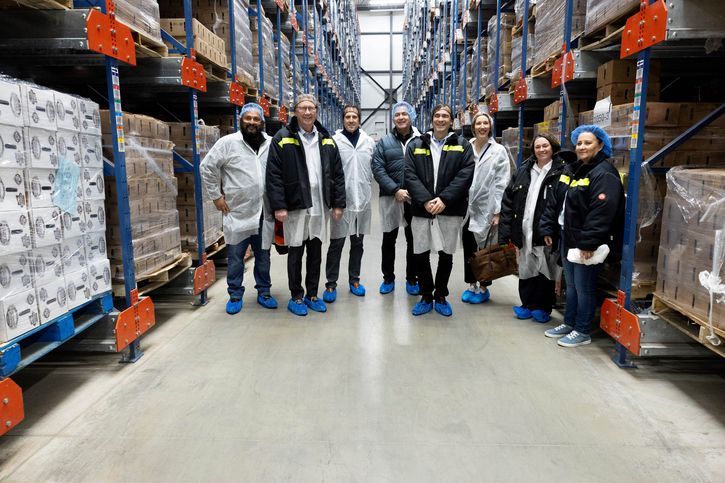
The Bueno Foods tour featured a visit to its 28,000 square-foot freezer storage building.
Northern New Mexico is part of the seven states represented by the Kansas City Fed at the Federal Open Market Committee, with the Kansas City Fed serving as the regional headquarters of the nation’s central bank. The visit to Albuquerque kicked off a series of events this year designed to further deepen the Kansas City Fed’s understanding of how the nearly 20 million citizens and communities it serves are experiencing the economy in real time.
Connecting Business Insights to Monetary Policy
Baca spoke openly during the Kansas City Fed tour about economic opportunities and issues facing Bueno Foods. Like many in food production and distribution, Baca said Bueno Foods is still seeing some impacts of COVID-19 on the labor market. As a result, many restaurants the business supplies are not fully operational. On top of that, Baca said retail customers are especially price conscious, which means extra pressure on keeping their operational costs down. Nick Sly, Kansas City Fed Denver Branch executive and economist, said gauging the challenges and opportunities of local businesses is key to his work. Because of that, tours like the one of Bueno Foods are essential.
“This outreach gives us a chance to actually hear from people who are making decisions for their workforce, households, or businesses,” Sly said. “Those discussions provide important information for President Schmid as he develops his views on monetary policy.”
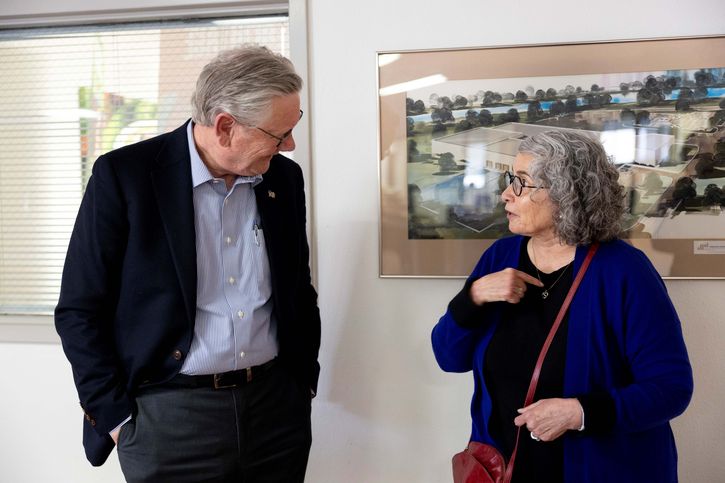
Kansas City Fed President and CEO Jeff Schmid (left) speaks with Jackie Baca, former Bueno Foods president and Denver Branch Board alum.
Baca said the business was competing well and was happy with its access to capital – in part because of its partnerships with community banks. As the Federal Reserve Bank with the highest number of community banks in its region, the Kansas City Fed has a vital role in not only understanding economic conditions, but also how regional financial institutions partner with local businesses, said Sly. That’s why its banking staff, community development teams, and economists stay closely connected to Albuquerque and the northern New Mexico economy.
“The reality is, our roots here run deep,” Sly said.
New Mexico has a large ag economy and as a food producer, Baca said sourcing New Mexican products and securing farm workers has been complicated. In 2025, the Kansas City Fed launched its Center for Agriculture and the Economy, and Sly said stories like Baca’s highlight how closely tied agriculture is to the history and culture of the state.
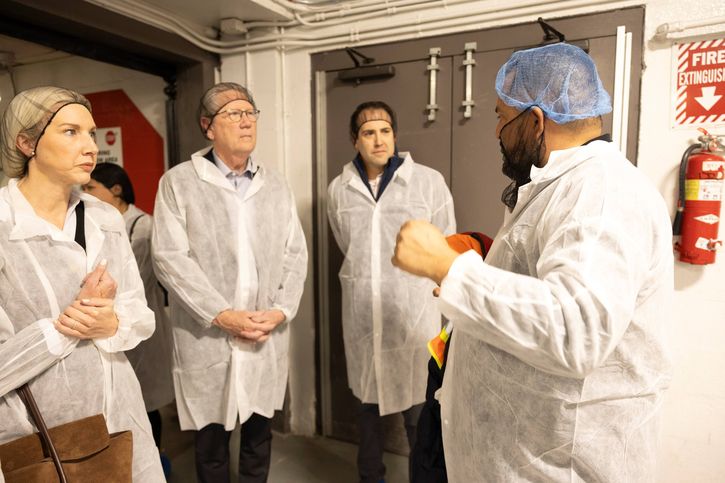
The Kansas City Fed team hears how Bueno Foods processes and stores Hatch chiles.
“Hatch chile farming in the southern part of the state and the food processing that takes place in the north is more than just a distribution of food products,” said Sly. “It’s really an expression of the cultural identity of New Mexico and it’s great to be able to learn from the people that have lived this for generations.”
While the tour provided meaningful insights for the Kansas City Fed, Baca said it was equally valuable for him as a business owner.
“Being able to talk to the representatives of the Fed and having our message carried all the way to D.C. is really powerful,” said Baca. “It gives us a voice where we may not have had one otherwise.”
Engaging With Local Business Leaders
A visit with the External LinkEconomic Forum of Albuquerque was the second stop on the Kansas City Fed’s New Mexico trip. Along with Schmid’s speech and a Q&A session, the event included informal conversations with Kansas City Fed staff.
Del Esparza, Denver Branch board chair and CEO of Esparza Digital + Advertising Agency, introduced Schmid at the forum. As a board member, Esparza relays local insights to the Kansas City Fed to ensure diverse views from the public are part of the central bank’s monetary policy deliberations.
“One of my biggest takeaways from joining the board is how human-centric the Federal Reserve is: It drills down to every single person—what pain points they’re experiencing, from buying a home or car to how often they frequent restaurants,” Esparza said.
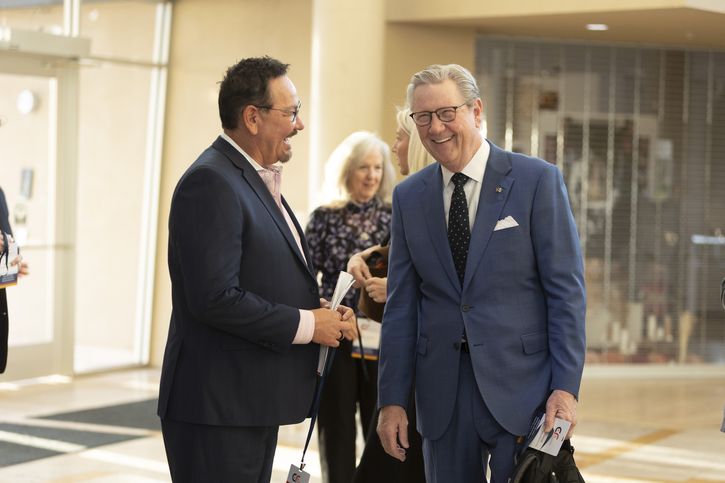
Del Esparza, Denver Branch Board Chair and Chief Executive Officer of Esparza Digital + Advertising (left), talks with President Schmid before the Economic Forum of Albuquerque event.
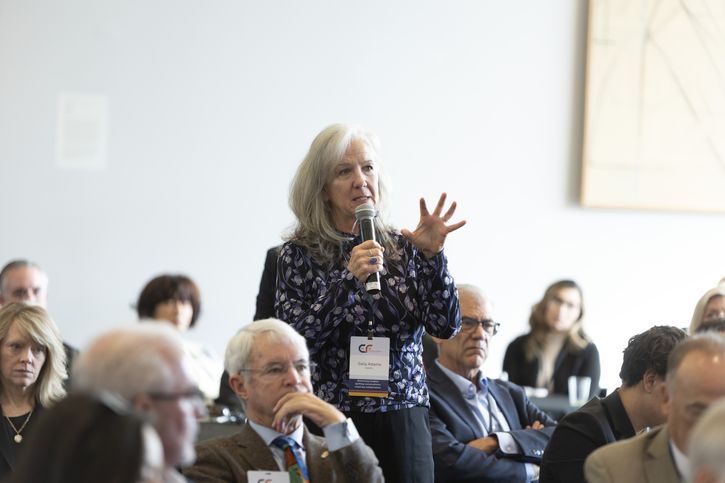
An attendee of the Economic Forum of Albuquerque event asks a question during a Q&A segment.
Kansas City Fed leaders also participated in a roundtable discussion with a dozen local industry heads representing firms in finance, health care, engineering, and labor.
Janice Torrez, president of Blue Cross and Blue Shield of New Mexico, said the roundtable was a meaningful opportunity to learn from a diverse group of business leaders.
“It was not only great to work with the Federal Reserve, but it also was great to be brought together. Collectively, we can identify opportunities and collaborate for a better economy in New Mexico,” Torrez said.
Natalie Cordova, executive director of the New Mexico Education Trust Board, agreed.
“We’re generally seen as a small, rural-based state,” Cordova said. “I think there’s a huge impact to having this opportunity to show the Fed what our state is like and what the economics in our state look like to make sure we’re represented.”
Strengthening Ties
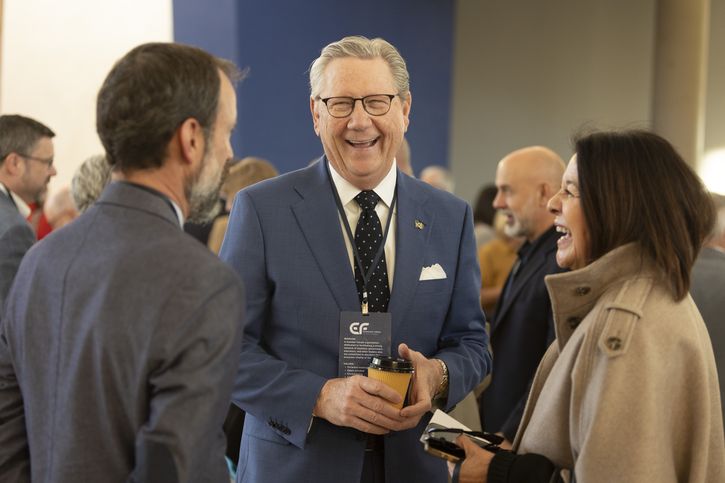
President Schmid (center) speaks with Economic Forum of Albuquerque attendees, including María Griego-Raby (right), former Deputy Chair of the Kansas City Board of Directors.
Reflecting on the Albuquerque trip, Schmid said he was motivated by the entrepreneurship and community-centric development happening in the state.
“To go from a kernel of white corn to one of the tastiest tamales you’ve ever eaten is just inspiring to me,” Schmid said. “Meeting the people who are doing the work in Albuquerque and seeing how important that work is to their community and livelihood makes our mission very personal and very real.”
In the weeks and months ahead, while preparing for Federal Open Market Committee discussions, Schmid, Bank leaders, and economists will discuss economic measures like labor indicators and inflation rates. But they’ll also talk about northern New Mexico and what community members told them.
While more than 800 miles separate Albuquerque from the Kansas City Fed, the connection between them has never been stronger.
New Mexico's Economic Landscape
The northern half of New Mexico is part of the seven-state region the Kansas City Fed serves as the regional headquarters of the nation’s central bank. Nick Sly, Kansas City Fed Denver Branch executive and economist, provides a quick glance at the state’s economic landscape:
- Energy: Southern New Mexico hosts part of the Permian Basin, making the state the second-largest oil producer behind Texas. Oil production has been a significant source of tax revenue to the state, as this has been a transformative economic development in NM.
- Agriculture: “Red or green?” Chile production represents cultural heritage, culinary tradition, and state identity.
- Government: Government employment plays a major role in New Mexico’s economy, accounting for about 25% of jobs—well above the national average of 15%—with federal installations such as national laboratories and military bases among the state’s largest employers. Additionally, Native American tribal governments contribute significantly to the state’s economy through gaming, tourism, arts, and natural resource development.
The views expressed are those of the authors and do not necessarily reflect the positions of the Federal Reserve Bank of Kansas City or the Federal Reserve System.