
Insights on Agricultural and Rural Economies
Regular updates and concise analysis on agricultural and rural economic trends from the Center for Agriculture and the Economy.
Disclaimer
The views expressed are those of the authors and do not necessarily reflect the positions of the Federal Reserve Bank of Kansas City or the Federal Reserve System.
The Number of Cattle Processed into Beef Has Declined Alongside Low Inventories and Reduced Slaughter Capacity
U.S. beef cattle slaughter has continued to deviate from the pre-pandemic baseline in early 2026. During 2020 and 2021, shocks associated with COVID-19, severe weather, and a cyberattack at JBS contributed to substantial disruptions in the beef supply chain. Similarly, in November 2025, the total number of cattle slaughtered in the U.S. was 22% lower than in January 2020. However, more recent deviations in cattle slaughter have not resulted from shocks in the supply chain but from historically low cattle inventories. As cattle inventories have declined, higher procurement costs and lower capacity utilization have created challenges in the beef packing industry and contributed to reduced hours for workers and closures at three beef packing plants in early 2026. Moving forward, reduced slaughter capacity will likely boost efficiency in the supply chain but keep beef production at lower levels.
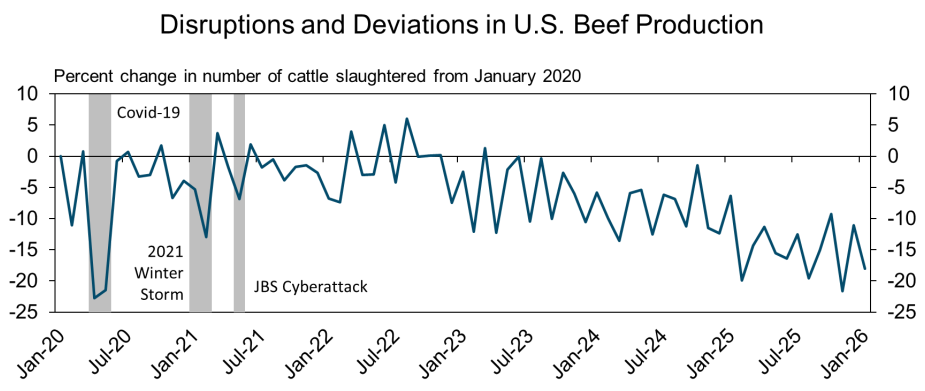
Note: Calculations based on the total number of cattle, greater than or equal to 500 pounds, that are slaughtered in commercial meat packing facilities in the United States.
Sources: U.S. Department of Agriculture (USDA) and Federal Reserve Bank of Kansas City staff calculations
Mass Layoff Events Occur Less Frequently in Rural Areas but Tend to Have a Larger Impact
A recent meatpacking plant closure in Lexington, Nebraska has highlighted the severe, negative consequences of large employment disruptions on small communities. A recent Economic Bulletin provides an overview of these expected consequences with a particular focus on Lexington. Existing literature suggests that smaller, more economically concentrated communities might face larger negative consequences than larger, more economically diversified areas. As the charts below show, mass layoffs have occurred less frequently in rural areas but those occurrences, on average, tend to affect a much larger share of the local labor force.
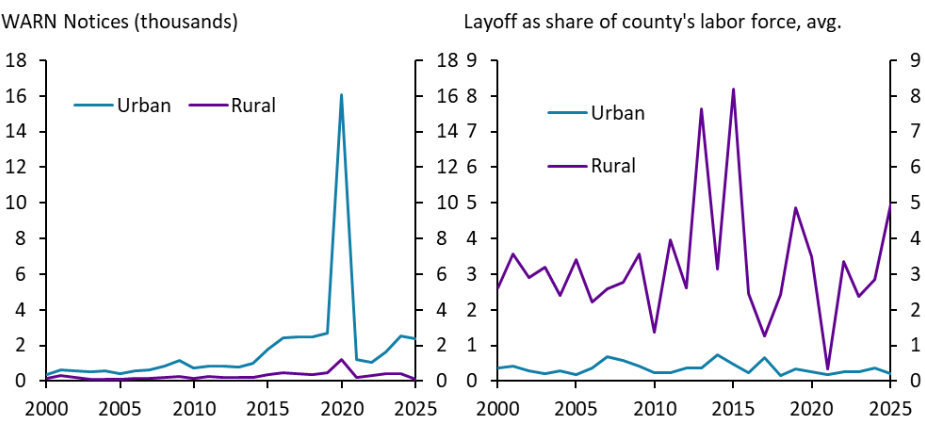
Mass Layoff Events Announced through WARN Notices Since 2000
Note: right hand chart includes only those WARN notices impacting at least 100 workers where the location of the layoff is in a single location and where the location is easily identifiable. On average, about 16% of notices per year affect multiple locations or do not have easily accessible geographic information. The WARN Act requires employers with at least 100 employees to provide advance notice of employment disruptions under External Linkcertain criteria.
Sources: warntracker.com and Federal Reserve Bank of Kansas City staff calculations
USDA’s Net Farm Income Projections Reflect New Timing of Government Transfer and Weaker Revenues in Parts of the Livestock Sector
Estimates from the United States Department of Agriculture (USDA) showed a decline in net farm income for 2025 of more than $25 billion from the previous projection. The timing of government payments previously expected during 2025 were responsible for most of the decline. Lower than expected revenues in the livestock sector, particularly for poultry and eggs and small upticks in feed, fertilizers, and pesticides expenses pulled net farm income lower than projected in September of last year. Crop revenues slightly offset the declines, as the USDA estimated oil crop revenues in 2025 to be stronger than previously projected.
Initial projections by the USDA indicate that net farm income may decline by 2.6% ($4 billion) in 2026 compared to last year. Government payments are expected to continue to contribute positively to net farm income, totaling $42 billion, as some direct transfers planned for 2025 will likely be paid in 2026. Projections show operational expenses softening slightly, while livestock revenues may increase moderately, which could help pull net farm income higher. However, the USDA projects lower revenues from crops, dairy, and poultry and egg production, which may offset some of the projected savings on inputs and expected gains from other sectors.
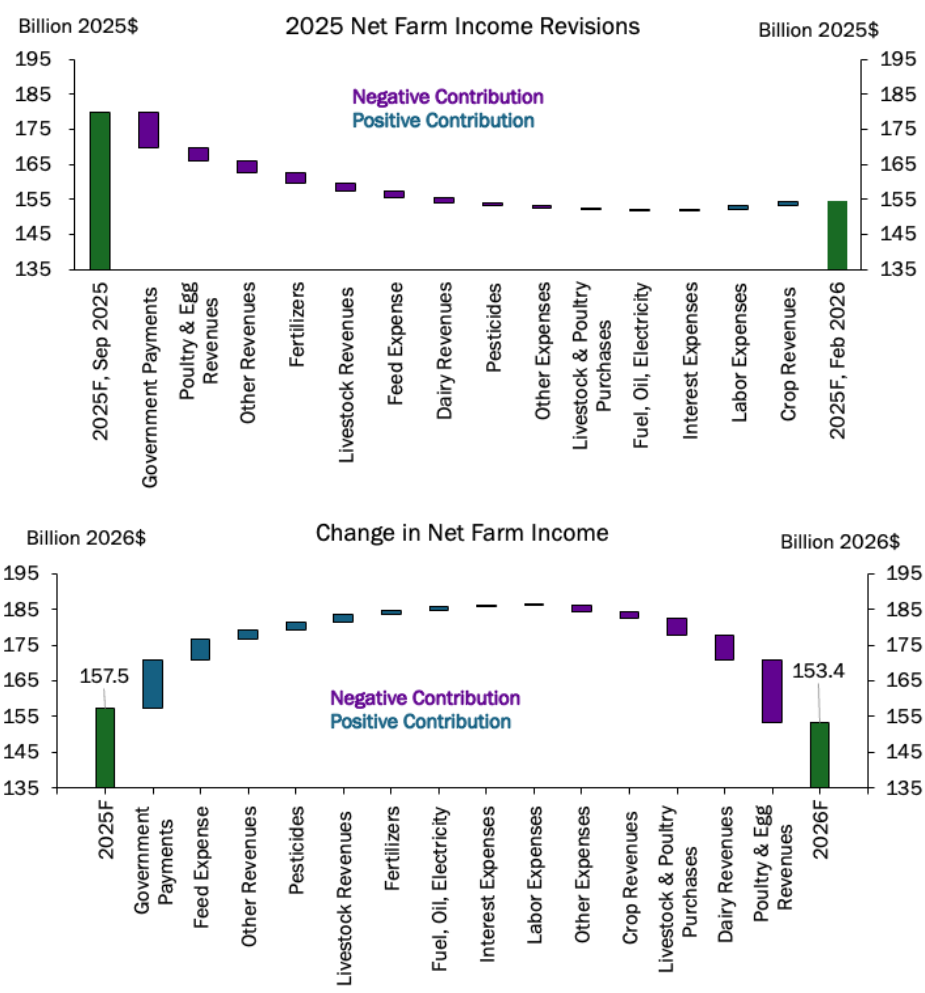
Source: USDA, staff calculations.
Demand for Stable Access to Water Has Supported a Rise in the Price Differential for Tenth District Irrigated Farmland
According to fourth quarter results from the Tenth District Survey of Agricultural Credit Conditions, land values remained stable in 2025, with a premium for irrigated farmland. In fact, the price differential between irrigated and non-irrigated farmland has increased five-fold in the last two decades. The rise in the premium for irrigated farmland has been supported by heightened demand for stable access to water given more severe droughts, depletion of existing water resources, and the pursuit of higher yields. Rather than large-scale expansion of irrigated acreage, mounting concerns about water scarcity have altered investment decisions and production practices towards the adoption of more efficient irrigation technology and shifting regional cropping patterns.
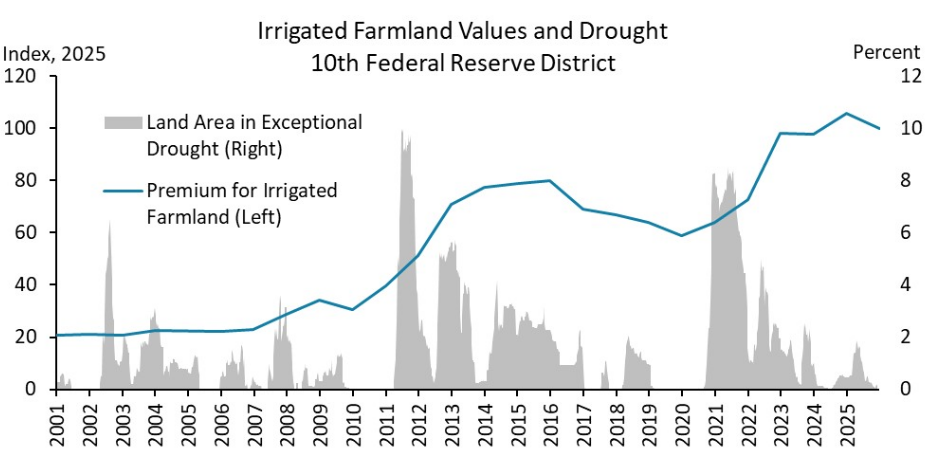
Note: The premium for irrigated farmland is calculated as the difference between the survey average of irrigated and non-irrigated land values (per acre). This difference is indexed to 2025 to account for inflation. Exceptional drought refers to the highest intensity level on the U.S. Drought Monitor, indicating a 1-in-100-year event.
Sources: Federal Reserve Surveys of Agricultural Credit Conditions; National Integrated Drought Information System’s U.S. Drought Monitor.
High Production Costs and Subdued Liquidity Spurred Strong Farm Lending Activity in 2025
Estimates from the National Survey of Terms of Lending to Farmers showed a 20% year-over-year increase in the average inflation-adjusted volume of new farm operating loans at commercial banks during 2025. Demand for financing grew considerably for the second consecutive year alongside elevated production expenses and subdued liquidity in the sector, particularly for crop producers challenged by narrow profit margins. The latest Ag Finance Update describes how the growing size of operating loans continued to drive increases in lending volumes over the past year.
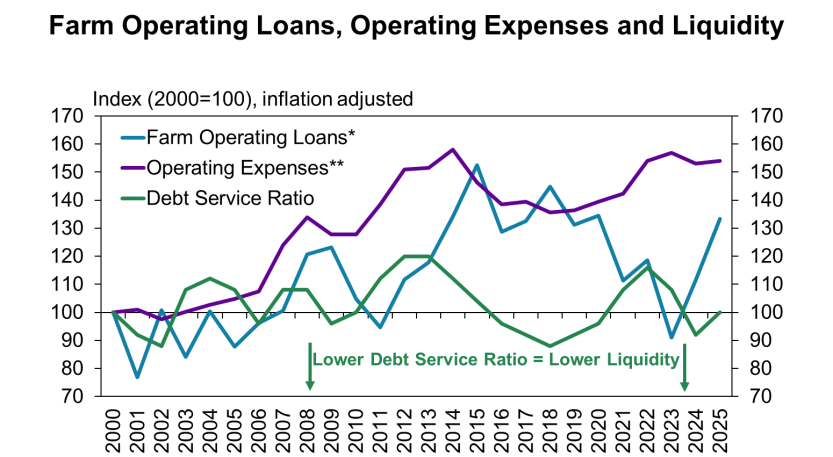
*Average annual volume of loans for current operating expenses estimated in the Survey of Terms of Lending to Farmers.
**Total U.S. farm sector production expenses less interest expenses and capital expenditures.
Sources: USDA, Survey of Terms of Lending to Farmers, Federal Reserve Bank of Kansas City and Federal Reserve Bank of Kansas City staff calculations
Artificial Intelligence Could Be Useful for Increasing Productivity and Managing Labor Costs in the Agricultural Sector
Like other industries, agricultural businesses employ individuals whose labor could be enhanced with Artificial intelligence (AI). The share of current employment in agriculture exposed to AI varies across states and is influenced by differing labor requirements among farm products. In regions like the Midwest and Plains, agriculture concentrated in row crop production requires relatively few employees and a greater share of labor could be enhanced with the use of AI. Conversely, the prevalence of specialty crop production in California and Florida requires more in-field farm workers that could limit the benefits of AI.
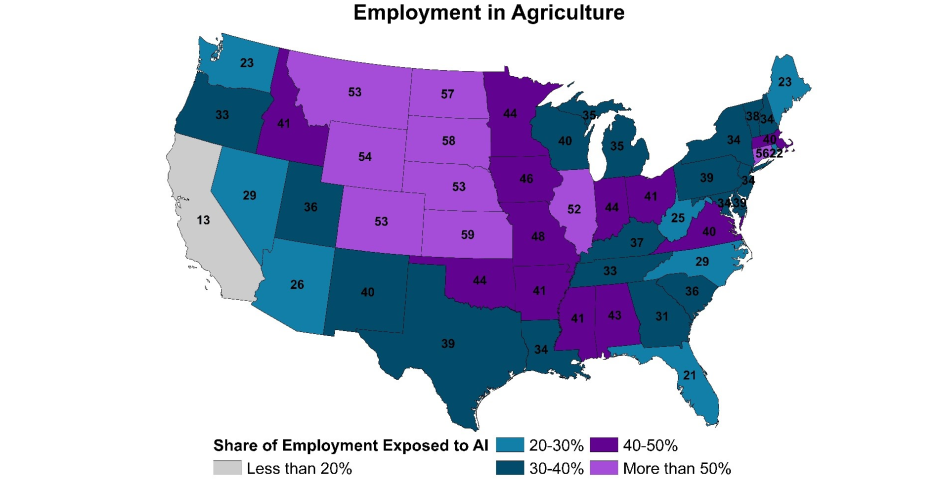
Note: The map follows calculations described in the December 2025 Nebraska Economist (External LinkMcCoy 2025). Employment includes agriculture, forestry, fishing, and hunting industries.
Sources: Eloundou et al (2024), Census Bureau (American Community Survey), author’s calculations.
Government Assistance and Insurance Payouts Will Limit Losses for Some Crop Farms
Profit opportunities in the crop sector remained limited at the end of 2025, but the combination of ad hoc government assistance and expected crop insurance payouts is likely to support farm financial conditions. A hypothetical analysis estimates a corn and soybean farm with average U.S. yields, selling at average annual cash prices will lose $80 per acre in 2025. If these conditions persist in early 2026, those losses could be cut in half with disbursements from the Farmer Bridge Assistance (FBA) Program and mostly offset with payments from revenue and price protection programs. The level of direct support is notable compared with recent years and together with aid from the Emergency Commodity Assistance Program (ECAP) earlier this year, could ease financial stress for many crop producers.
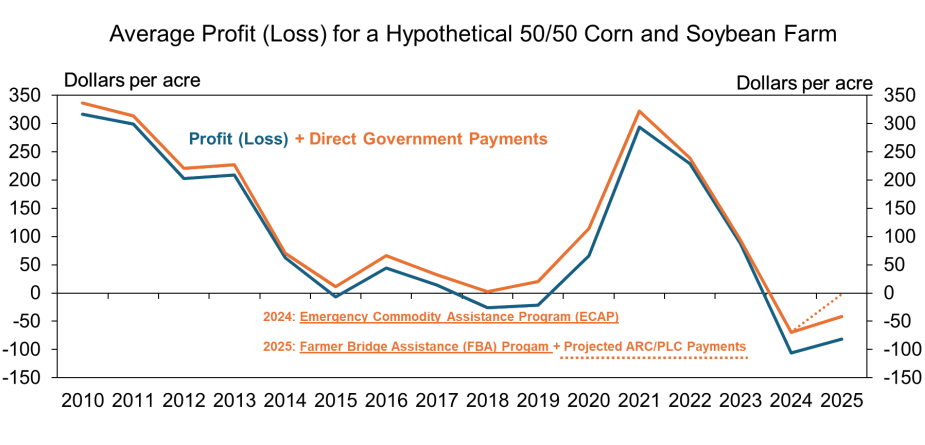
Note: Profits are based on production costs from the USDA cost and return estimates and national average yields and prices. For purposes of this analysis, the opportunity cost of unpaid labor is excluded from total costs. Government payments from 2010-2023 are estimated using average government payments per farm for corn and soybean specialized operations reported in the Agricultural Resource Management Survey (ARMS). Estimated payments from FBA and ARC/PLC in 2025 are derived from analysis published by University of Illinois at Urbana-Champaign.
Sources: USDA, Wall Street Journal, Reports of Condition and Income, University of Illinois at Urbana-Champaign, and Federal Reserve Bank of Kansas City staff calculations