
Center for Agriculture and the Economy
Leveraging expertise from the Kansas City Fed, the Center provides timely analysis of industry developments and conducts ongoing research on the agricultural economy.
Farm Financial Stress Remains Moderate
By Nate Kauffman
October 8, 2026
Farm loan repayment rates have remained slightly weaker than a year ago, but the pace of deterioration has slowed recently alongside a significant increase in crop prices. According to the Federal Reserve Bank of Kansas City’s quarterly survey of agricultural credit conditions, the diffusion index for farm loan repayment rates was 82 in the third quarter, indicating some deterioration from a year ago, but not as weak as the previous quarter. Crop prices increased notably from the second quarter to the most recent quarter, with corn and soybean prices up by 8.0% and 7.4%, respectively. The increase in crop prices has led to External Linkimproved profitability among row crop producers despite large increases in costs associated with diesel.
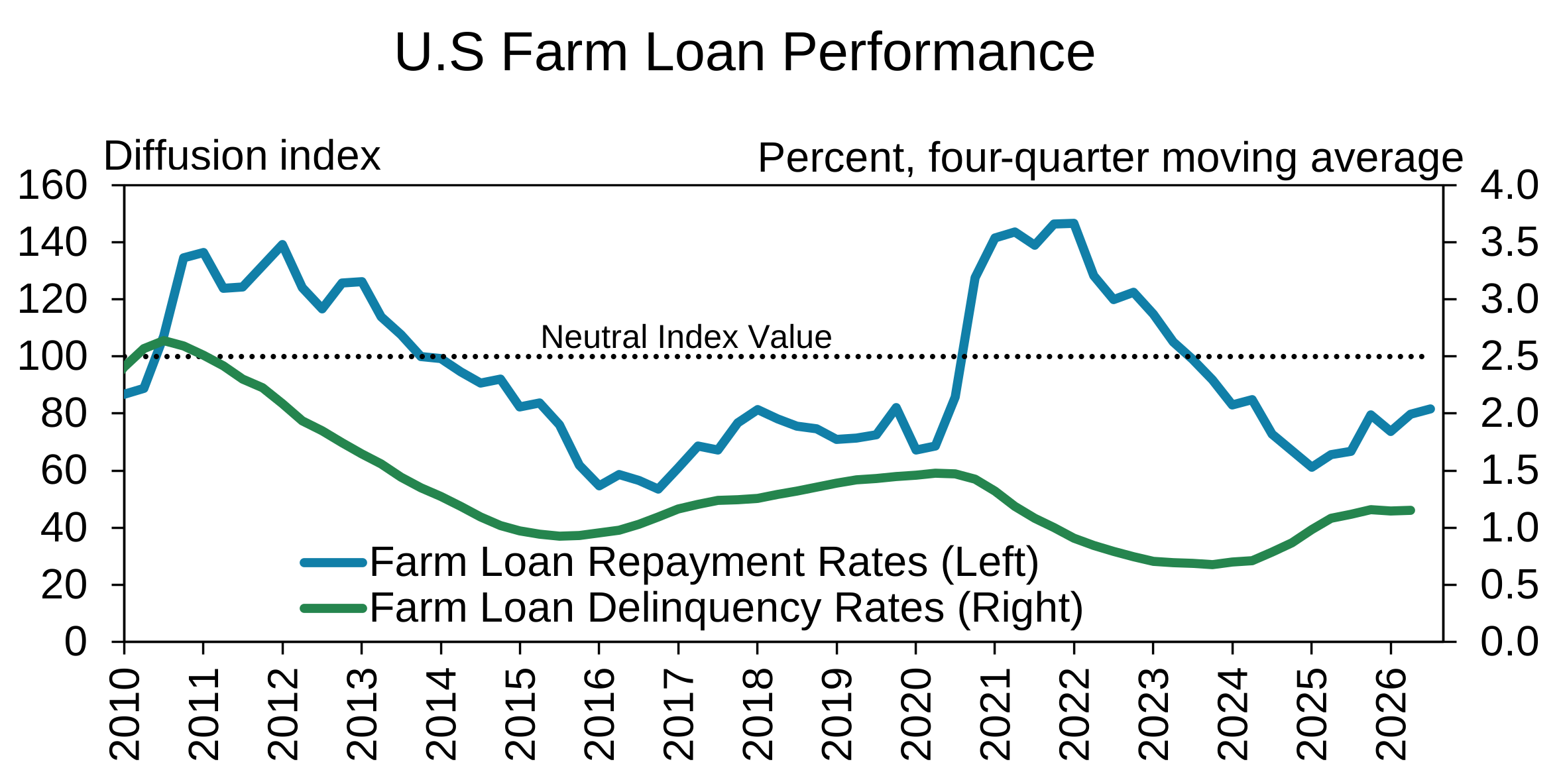
Notes: Farm loan delinquency rate data are sourced from the Consolidated Reports of Condition and Income (Call Reports) for commercial banks and from Uniform Call Reports filed by agricultural credit associations within the Farm Credit System to the Farm Credit Administration. Farm loan repayment rates are obtained from the Federal Reserve Bank of Kansas City’s Quarterly Survey of Agricultural Credit Conditions and displayed as a diffusion index. The index numbers are computed by subtracting the percentage of survey respondents who responded “lower” from the percentage who responded “higher” and adding 100.
Sources: Commercial Bank Reports of Condition and Income; Farm Credit Administration; Federal Reserve Bank of Kansas City Survey of Agricultural Credit Conditions
Find additional Insights on Agricultural and Rural Economies.
Research and Information
Agricultural Finance
Research and articles tracking trends in agricultural finance.
Insights on Ag and Rural Economies
Concise analysis on agricultural and rural economic trends.

Agricultural Data and Indicators
Data on economic and financial conditions in agriculture.
Agriculture Research Hub
All of the Kansas City Fed's research and resources on agriculture and related topics.
System Resources
Links to research and resources on agriculture and rural topics from throughout the Federal Reserve System.
Latest Research and Updates

-
2026 Agricultural Economic Summit: The Business of Agriculture Amid Structural Change | -
Further Strength in Farm Loan Growth and Agricultural Bank Financial Performance | -
Agricultural Economic Summit explores structural change in the ag sector | -
Farm Finance Deterioration Eases Slightly | -
Steady Tightening of Agricultural Credit Conditions Persists | -
High Costs and Uncertainty Will Likely Keep Cattle Inventories Low and Beef Prices Elevated for Some Time |
-
Further Strength in Farm Loan Growth and Agricultural Bank Financial Performance | -
Farm Finance Deterioration Eases Slightly | -
Steady Tightening of Agricultural Credit Conditions Persists | -
New Farm Loan Originations Ease Slightly | -
Farm Loan Growth Remains Strong as Lending Shifts at Some Large Banks | -
Continued Resilience in Farmland Values |
- Update on U.S. Economy and Agriculture |
-
Agriculture, the Economy, and the Kansas City Fed | - Economic Update on the U.S. Farm Economy |
- Update on Agricultural Credit Conditions |
- Agricultural Economic and Financial Outlook |
- An Update on Agriculture and the Economy - AgExcellence Nashville |
The Kansas City Fed's Continuing Commitment to Agriculture
Through regular surveys, analysis and connections across the industry, the Kansas City Fed has had a longstanding focus on U.S. and global agriculture. Leveraging this expertise, the Center for Agriculture and the Economy serves as a resource within the Federal Reserve System by providing timely analysis of industry developments and conducting ongoing research on the agricultural economy. The Kansas City Fed is committed to understanding developments in the agricultural economy and gathering perspectives from rural America in order to include them in discussions on the national economy.
The Kansas City Fed's Ag Connection
Agriculture is central to the Kansas City Fed’s 10th District’s economy, from farm production and food manufacturing to agricultural banking and finance. Through its regular surveys, analysis and connections across the industry, the Kansas City Fed has had a longstanding focus on the U.S. and global agricultural economy. At the same time, connecting with stakeholders and ag industry professionals through events, round tables and conversations is critical to the Bank’s work.